

Standing Desk vs Sitting: How to Find the Right Balance
Standing Desk vs Sitting: How to Find the Right Balance
If your job is centred around you working at a desk, do you prefer to be sitting down or standing up when completing tasks?
There are advantages and disadvantages of either option, so join Fellowes ® as we explain why the key should be for us all to find the right balance for long-term comfort and productivity.
Key takeaways from this article:
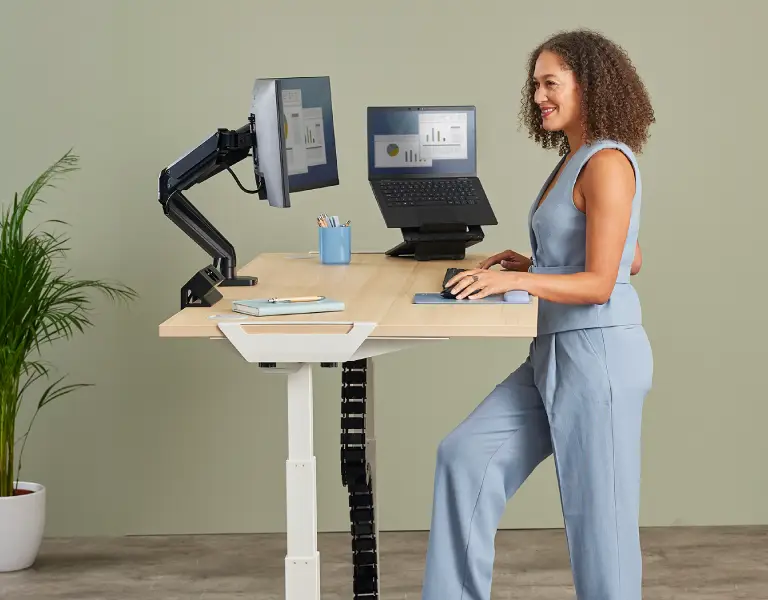
Advantages of standing at your desk
Keeping on our feet when we are at a desk has so many benefits, including:
-
You will feel productive – Standing helps improve blood flow and oxygen levels throughout the body, which can boost alertness and productivity.
-
It can reduce the risk of experiencing neck and back pain – Aligning your workstation to your height will mean that your head and neck can stay in a neutral position as you work. It will also encourage you to reduce slouching.
-
You can burn calories while completing tasks – Being on your feet will burn a few more calories than if you were seated at your desk.
-
Your energy levels will receive a boost – A clinical study reported on by Nuffield Health found that 87% of people who switched to a standing desk felt increased energy during their work shifts.
-
You can engage some of your core muscles – Though only light engagement, these muscles will gently tense your midsection, helping you build abdominal strength.
Disadvantages of standing at your desk
Choosing not to sit down at all during your work shift can have its downsides though:
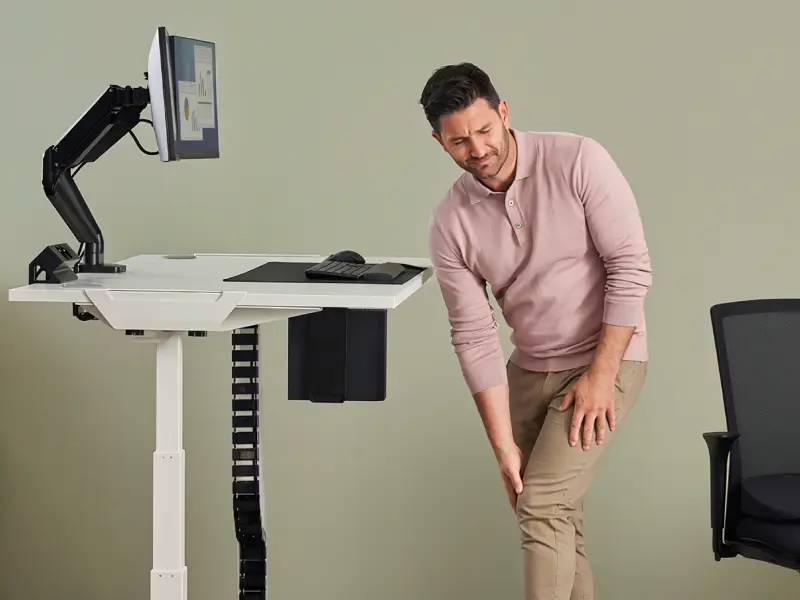
Your legs and feet can start to feel the strain
Standing for long periods can put strain on lower body joints and lead to muscle fatigue, causing discomfort or pain.
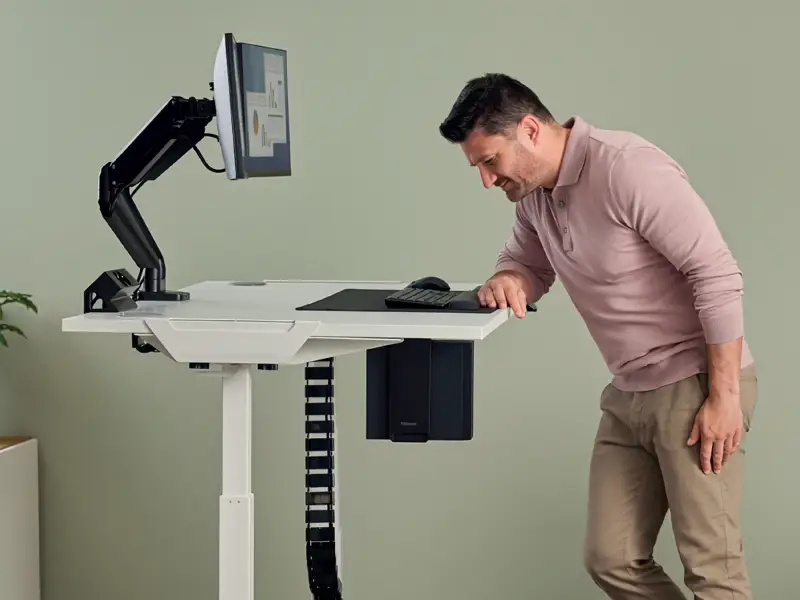
Your reaction time can reduce
Stand up for hours at a time and your body will need to direct more nutrients and blood to where it is required to keep you upright.
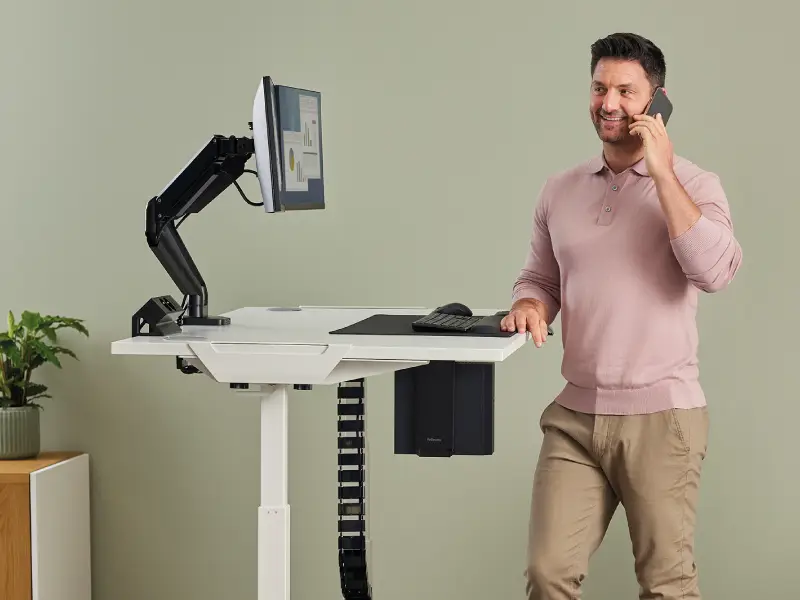
It is not practical to stand for some tasks
If your job sometimes involves drawing or tasks that requires a lot of concentration, these may be better to complete while sitting down. Use your time standing up to answer emails or take calls with clients or other colleagues.
Advantages of sitting at your desk
The familiarity of sitting at a desk does have its plus points, which include:
-
You receive stability - Sitting on a chair gives you a stable base of support, which you will appreciate when you have long tasks to get through that require focus.
-
You can let muscles relax - As long as your office chair is set up correctly for you, sitting at a desk can put less strain on your legs and give the muscles around your body a chance to relax.
-
There are various ways to adjust your office chair - A high-quality office chair will be designed so that you can adjust its height, tilt angle and more so that it is perfectly aligned to your seating position.
Disadvantages of sitting at your desk
We should avoid sitting at a desk for the entirety of a working day though, because of these reasons:
-
Your body’s metabolism will feel the impact –
NHS studies have suggested that sitting for long periods could slow your metabolism. What this means is that your body will have a reduced ability to do things like regulate blood pressure, blood sugar and break down body fat.
-
You put strain on your body’s abdominal muscles – These muscles will relax naturally, which will lead to them getting smaller if they are not activated for extended duration's.
-
Your spine suffers from being in one position – When your spine does not receive natural movement, back pain can occur as this part of your body receives less joint lubrication and starts to feel stiffer.
Stop looking at standing and sitting at your desk as competition
As we can see then, there are benefits and drawbacks involved whether you choose to sit or stand at a desk for a full shift.
You should therefore be aiming to intermittently go between either position across the working day, to encourage better circulation and blood flow throughout your body.
Movement is the fuel for a productive day, so we recommend switching positions to keep your energy flowing. Aim to bring this hourly routine into your desk job:
- Stand at your desk for no longer than 30 minutes.
- Sit at your desk for no longer than 20 minutes.
- Stretch out your muscles or have a walk away from your desk for 10 minutes (you could combine the walk into a meeting or work call too, so that the activity does not impact your productivity).
One of our sit-stand desks can help you with this routine, as they encourage better posture, more movement, and steadier focus by letting you quickly switch between sitting and standing during the day.
Reduce inactivity while working even more by also enhancing your space with: